

A career in the Pakistan Army offers opportunities to serve the country, develop professional skills, and build a structured military career. From newly recruited soldiers to senior commissioned officers, every rank has a defined place in the military hierarchy, with different duties, leadership responsibilities, and career progression opportunities.
For candidates preparing to join the armed forces, understanding the Pakistan Army ranks and salary structure is an important first step. Pay depends on several factors, including military rank, length of service, pay stage, applicable allowances, and the nature of an individual’s posting.
This guide explains the major Pakistan Army ranks, their responsibilities, indicative monthly salary figures, insignia, and promotion pathways. It also clarifies why figures published online may differ from the actual amount received by serving personnel.
Pakistan Army Salary Structure: An Overview
Military compensation is not determined by rank alone. An individual’s basic pay is calculated according to the applicable military pay arrangements, while eligible allowances and other benefits may increase the overall package.
The salary figures below are estimates drawn from the supplied reference material. They should not be interpreted as an officially confirmed salary schedule for October 2026.
1. Commissioned Officer Ranks and Estimated Salaries
Commissioned officers lead soldiers, manage military units, plan operations, and undertake administrative responsibilities. Their authority generally increases with rank, experience, and appointment.
| Army rank | Indicative monthly salary |
|---|---|
| General | PKR 270,000 |
| Lieutenant General | PKR 210,000 |
| Major General | PKR 160,000 |
| Brigadier | PKR 140,000 |
| Colonel | PKR 120,000 |
| Lieutenant Colonel | PKR 90,000 |
| Major | PKR 70,000 |
| Captain | PKR 75,000 |
| Lieutenant | PKR 55,000 |
| Second Lieutenant | PKR 55,000 |
Important: These amounts are unverified estimates, not guaranteed basic salaries or total monthly packages. The figures supplied for Captain and Major, for example, do not follow a consistent upward progression. Actual compensation should be checked against the applicable official military pay rules and current allowances.
Second Lieutenant
A Second Lieutenant is generally the entry-level commissioned officer rank following the prescribed commissioning and training process. Officers at this stage learn to lead personnel, manage routine military activities, and apply the professional standards required of commissioned leaders.
Lieutenant and Captain
Lieutenants and Captains develop leadership experience through unit appointments, training, and operational responsibilities. Depending on their branch and assignment, they may supervise soldiers, coordinate daily activities, and assist senior officers with planning and administration.
Major and Lieutenant Colonel
Majors and Lieutenant Colonels generally hold more substantial command, staff, or specialist appointments. Their responsibilities may involve managing personnel, planning unit activities, supervising operations, and coordinating resources.
Colonel and Brigadier
Colonels and Brigadiers typically occupy senior command or staff positions. Their duties can include overseeing major formations or departments, implementing organizational priorities, and supervising subordinate leaders.
Major General, Lieutenant General and General
These are the highest levels of the commissioned officer hierarchy. Senior officers undertake strategic leadership, oversee large military formations or institutions, and contribute to planning, administration, and the broader direction of the armed forces.
The General is the highest rank listed in the supplied salary reference. Appointment to senior ranks depends on military service regulations, selection, professional performance, and the availability of appropriate positions.
2. Pakistan Army Soldier and Non-Commissioned Ranks
Enlisted personnel and non-commissioned officers perform essential duties that keep military units organized and operationally effective. They support training, equipment management, discipline, communications, logistics, and other activities according to their assigned roles.
The following salary amounts are indicative estimates from the supplied material.
| Rank | Indicative monthly salary |
|---|---|
| Warrant Officer Class I | PKR 65,000 |
| Warrant Officer Class II | PKR 65,000 |
| Junior Warrant Officer | PKR 55,000 |
| Staff Sergeant | PKR 50,000 |
| Sergeant | PKR 48,000 |
| Lance Corporal | PKR 45,000 |
| Corporal | PKR 40,000 |
| Sepoy | PKR 32,000–35,000 |
These titles and figures should be treated cautiously. The supplied list mixes rank terminology and pay information that may not correspond directly to the current Pakistan Army hierarchy. The official rank title, service category, and applicable military pay rules should always take precedence over unofficial online charts.
Sepoy: The Starting Soldier Rank
The Sepoy, also commonly called a Sipahi or soldier, is the entry-level enlisted rank in the general soldier hierarchy.
Sepoys carry out duties according to their training and assigned military branch. Their responsibilities may include unit training, equipment care, guard duties, field assignments, and supporting the operational requirements of their unit.
The supplied reference estimates a starting monthly salary of approximately PKR 32,000–35,000. This is not a verified current take-home salary, and actual compensation may differ according to pay revisions, allowances, and deductions.
Lance Naik
Lance Naik is a junior non-commissioned rank above Sepoy in the traditional enlisted hierarchy. Personnel at this level may take on additional responsibilities and assist in guiding less-experienced soldiers.
The reference material gives an estimated monthly figure of PKR 45,000–50,000, including allowances. That estimate should not be treated as an official salary entitlement.
Naik and Havildar
Naik and Havildar are supervisory ranks within the enlisted structure. Personnel may assist with discipline, training, routine administration, equipment accountability, and the coordination of smaller groups.
A Havildar generally carries greater supervisory responsibility than a Naik. Duties vary according to the unit, military branch, and appointment.
Naib Subedar, Subedar and Subedar Major
These senior enlisted leadership ranks are traditionally associated with the Junior Commissioned Officer (JCO) category. They occupy an important position between commissioned officers and other enlisted personnel.
- Naib Subedar: A junior JCO rank with supervisory and administrative responsibilities.
- Subedar: A more senior JCO rank, often involving substantial leadership and coordination duties.
- Subedar Major: The senior-most traditional JCO rank, providing experienced leadership and advice within a unit.
Also Read More Check: Assistant Superintendent Jail Salary in Pakistan
These positions are distinct from commissioned officer ranks. Their responsibilities and compensation are determined by the applicable military rules and appointments.
3. Understanding Pakistan Army Pay Scales
Online salary tables sometimes assign civilian Basic Pay Scale grades such as BPS-17 or BPS-22 to military ranks. This can create confusion because the military rank structure and civilian federal BPS framework are not interchangeable in every context.
For an accurate salary comparison, candidates should distinguish between:
Basic pay: The amount determined by the applicable military pay structure and the individual’s pay stage.
Allowances: Additional compensation authorized under relevant rules, which may vary by eligibility and assignment.
Gross salary: Basic pay combined with applicable allowances before deductions.
Net salary: The amount remaining after authorized deductions.
A published salary figure is useful only when it clearly identifies which of these categories it represents.
4. Allowances and Other Service Benefits
In addition to basic pay, eligible Army personnel may receive allowances or benefits under applicable service regulations.
Depending on the circumstances, these may include:
- Housing or accommodation-related benefits.
- Medical facilities and authorized healthcare benefits.
- Ration or other subsistence-related provisions.
- Field, operational, or location-specific allowances.
- Travel or other duty-related entitlements.
- Retirement benefits under the applicable service scheme.
Not every benefit is paid as cash, and eligibility is not universal. Some benefits depend on the nature of the appointment, location, service status, or applicable regulations.
For this reason, two personnel with similar ranks may receive different total compensation.
5. Pakistan Army Rank Insignia
Military insignia help identify rank and distinguish responsibilities within the hierarchy. The design depends on the category of personnel and the uniform in which it is displayed.
In broad terms, commissioned officers, JCOs, and other enlisted ranks use different insignia systems.
For example, commissioned officer insignia may incorporate stars, crossed swords, or other rank-specific symbols, while enlisted rank markings can include chevrons and other identifying features.
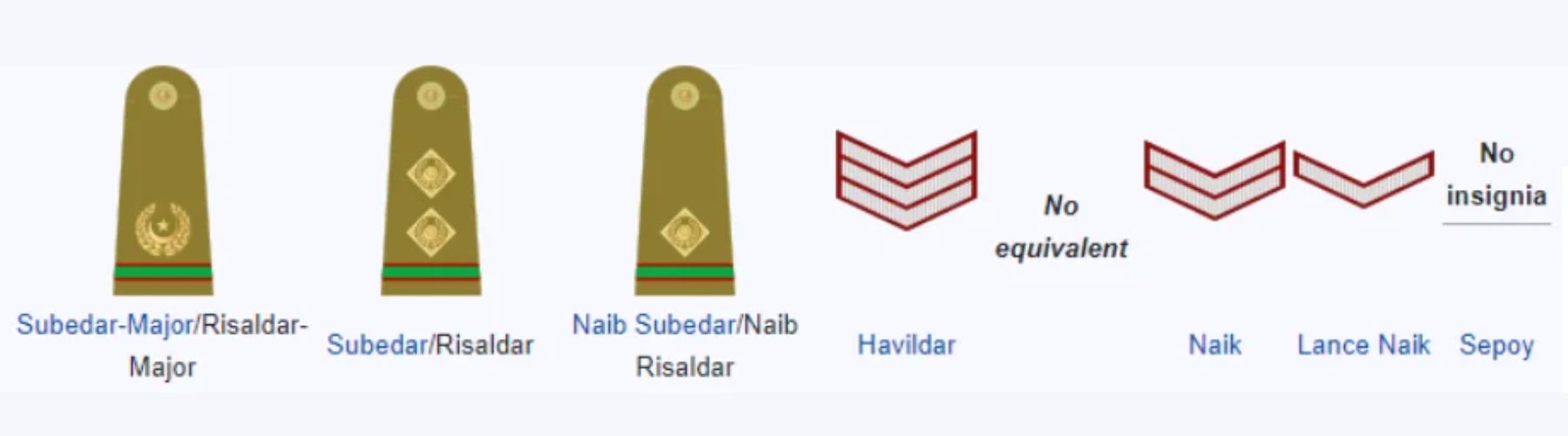
The exact insignia should be checked against official Pakistan Army uniform references. Designs can vary by rank category, uniform type, and dress regulations, so a simplified online description should not be treated as a definitive identification guide.
6. Promotion Opportunities in the Pakistan Army
Promotion depends on the applicable service regulations rather than a fixed number of years alone. Relevant considerations can include service length, performance, professional courses, fitness standards, disciplinary record, selection procedures, and the availability of vacancies.
Enlisted personnel may progress through eligible ranks as they gain experience and meet the required conditions. JCO advancement follows its own service framework, while commissioned officers have separate promotion pathways.
There is no universal guarantee that every soldier will be promoted after five or six years. The timing and availability of advancement differ according to the individual’s category, branch, and service requirements.
Candidates should therefore focus on meeting official eligibility standards and developing the professional skills required for their chosen career path.
7. How to Verify the Latest Pakistan Army Salary Information
Anyone planning to apply should rely on official recruitment and service information rather than assuming that figures published on third-party websites are current.
Before making a career decision, check:
- The latest applicable pay and allowance notifications.
- The official rank and recruitment category.
- The advertised entry requirements and training pathway.
- Whether a published figure refers to basic, gross, or net pay.
- Eligibility conditions for accommodation, medical care, and other benefits.
- The applicable promotion and retirement rules.
Recruitment information is available through the official Pakistan Army recruitment channels and the Inter Services Selection Board (ISSB) website at https://issb.gov.pk/ for relevant selection information.
Conclusion
The Pakistan Army has a structured hierarchy ranging from Sepoy and other enlisted ranks to senior commissioned officers. Each position contributes to the armed forces through operational duties, supervision, technical expertise, administration, or strategic leadership.
Although higher ranks generally involve greater responsibility, military compensation cannot be understood from rank names alone. Pay stages, allowances, service conditions, and the applicable military pay framework all influence actual earnings.
The salary figures presented in this guide provide a starting point for understanding the subject, but they have not been independently verified as official 2026 rates. Prospective applicants should confirm current compensation and eligibility requirements through official sources before relying on any particular amount.